Hypnotherapy for Anxiety: Helping You Feel More in Control
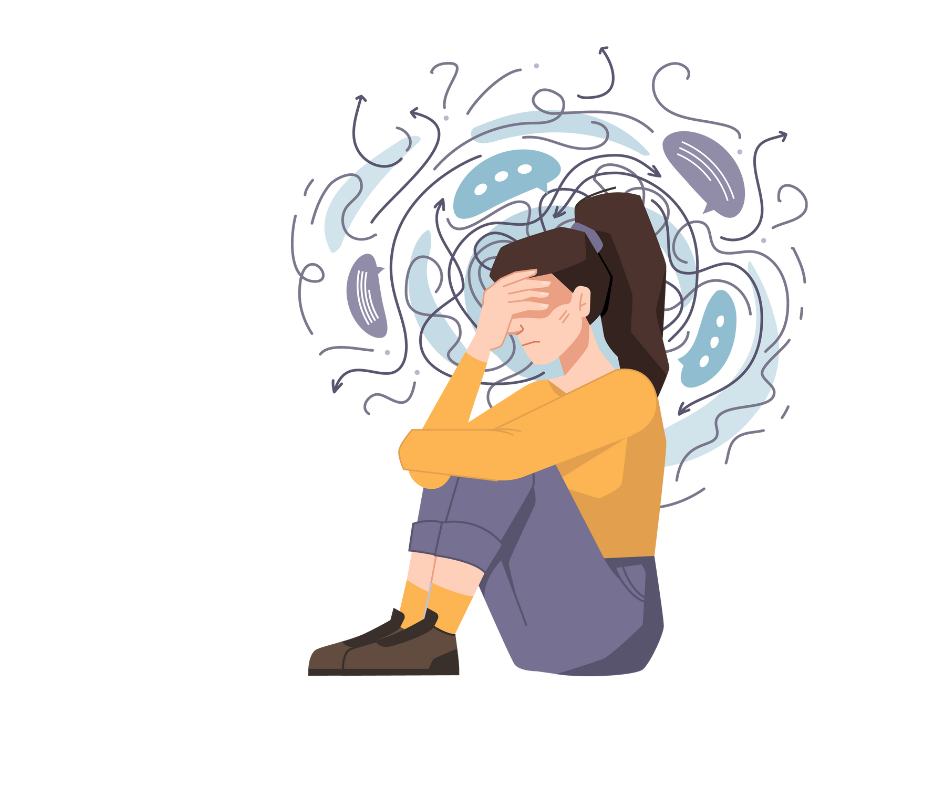
When anxiety starts to take over, your mind can feel like it never switches off.
Anxiety can affect far more than your thoughts.
It can change how you feel physically, how you sleep, how you behave and how you experience everyday life.
You may find yourself constantly worrying, overthinking conversations, anticipating the worst or feeling unable to relax.
Perhaps your heart races, your chest feels tight, your stomach reacts or you feel restless and on edge.
And sometimes you may not even know why you feel anxious.
What if you could teach your mind a different response?
This is where hypnotherapy may be able to help.
Anxiety isn’t “all in your head”
Anxiety is a very real mind-body response.
When your brain perceives something as threatening, your nervous system can move into a state of increased alertness.
Your heart rate may increase. Your breathing can change. Muscles can tense. Your attention becomes focused on potential danger.
This response is extremely useful when you actually need to escape danger.
The problem is that the body’s alarm system can sometimes become over-sensitive.
Your mind can learn to react to situations, thoughts or sensations as though they are dangerous — even when you are physically safe.
Over time, this can become a learned pattern.
How can hypnotherapy help anxiety?
Hypnosis is a naturally occurring state of focused attention and increased absorption.
During therapeutic hypnosis, you remain aware and in control while becoming deeply relaxed and focused.
This can provide an opportunity to work with some of the thoughts, beliefs, behaviours and automatic responses associated with anxiety.
Depending on your individual needs, hypnotherapy may focus on:
Calming the nervous system
Learning techniques to encourage relaxation and reduce the physical intensity of the stress response.
Changing anxious thought patterns
Becoming more aware of unhelpful patterns such as catastrophising, constantly anticipating problems or assuming the worst will happen.
Breaking the cycle of overthinking
Learning to respond differently when your mind becomes caught in repetitive thoughts and “what if?” scenarios.
Changing learned responses
If your anxiety has become associated with a particular situation, place, sensation or experience, hypnotherapy can help you explore and reshape those associations.
Building confidence
Anxiety can gradually convince you that you cannot cope.
Hypnotherapy can help reinforce a different internal message:
“I can handle this.”
Developing new coping strategies
The aim isn’t simply to feel relaxed during a session.
It is to develop skills and responses that you can use in everyday life.
Why does anxiety sometimes feel automatic?
One of the most frustrating things about anxiety is knowing logically that you are safe — while your body is telling you otherwise.
You might think:
“I know there is nothing to worry about, but I can’t stop worrying.”
Or:
“I know flying is statistically safe, but my body still panics when I get on a plane.”
Or:
“I know what I need to do, but I just can’t make myself do it.”
This happens because anxiety isn’t purely a logical process.
Our brains learn through repetition and association.
A situation that initially caused anxiety can eventually trigger an automatic response.
Hypnotherapy can be used alongside other approaches to help you change the pattern rather than simply fight against it.
What does the research say?
There is growing research into hypnosis and hypnotherapy for anxiety, although the evidence is not as extensive as it is for some established psychological treatments.
A systematic review published in BMC Psychiatry examined hypnosis for anxiety and found evidence suggesting that hypnosis may have beneficial effects on anxiety symptoms. However, the researchers also highlighted limitations in the available studies and the need for better-quality research.
This is why I believe it is important to be honest about what hypnotherapy can and cannot claim to do.
Hypnotherapy isn’t a magic cure.
It is a therapeutic approach that may help you develop a different relationship with anxious thoughts, sensations and situations.
And for some people, that change can be significant.
Hypnotherapy and CBT — working with the mind from different angles
Cognitive Behavioural Therapy (CBT) is one of the best-established psychological approaches for anxiety.
CBT helps you identify the relationship between your thoughts, feelings, physical sensations and behaviours, and develop healthier ways of responding.
Hypnotherapy can complement this approach by incorporating relaxation, focused attention and therapeutic suggestion.
Rather than trying to force anxious thoughts away, the aim is to help you:
Notice the thought.
Change the response.
Regain a sense of control.
What happens during an anxiety hypnotherapy session?
Your session starts with a conversation.
There is no expectation that you simply lie back and “go under”.
We’ll explore what is happening for you, what triggers your anxiety and how it affects your everyday life.
We may look at:
- What situations make you anxious
- What thoughts tend to appear
- How your body responds
- Whether you avoid particular situations
- What you fear might happen
- How anxiety affects your confidence
- What you would like to be able to do differently
The hypnotherapy is then tailored around you.
You remain awake, aware and in control throughout.
You don’t have to wait until anxiety becomes overwhelming
Many people become very good at functioning while anxious.
They go to work.
They look after their families.
They socialise.
They carry on with everyday life.
But underneath, they may constantly feel tense, worried or exhausted.
You don’t have to be experiencing severe anxiety for it to be worth addressing.
If anxiety is affecting the way you think, behave or live your life, it may be time to do something about it.
Hypnotherapy isn’t about controlling your mind.
It’s about learning to feel more in control of it.
Imagine being able to notice an anxious thought without automatically believing it.
Imagine being able to feel your heart race without immediately assuming something is wrong.
Imagine walking into a situation that previously caused anxiety and thinking:
“I’ve got this.”
That is the kind of change we work towards.
When might hypnotherapy be helpful?
Hypnotherapy may be considered as part of an individual approach to issues such as:
- General worry and overthinking
- Situational anxiety
- Performance anxiety
- Fear of flying
- Social anxiety
- Anxiety associated with particular situations
- Stress-related symptoms
- Confidence difficulties
- Sleep difficulties associated with an overactive mind
- Specific fears and phobias
However, anxiety can sometimes be a symptom of an underlying physical or psychological condition.
If your anxiety is severe, persistent, worsening or significantly affecting your ability to function, it is important to seek appropriate medical or psychological support.
Hypnotherapy should complement — not replace — appropriate healthcare when it is needed.
You can teach your brain a different response.
Your anxiety may feel automatic.
But automatic doesn’t necessarily mean permanent.
The brain is capable of learning.
And with the right support, you can learn new ways of responding to thoughts, feelings and situations that previously triggered anxiety.
You can’t always control what your mind thinks.
But you can learn to change how you respond.
If anxiety is holding you back, hypnotherapy could help you take back control.
Book a consultation with Purple Elephant Hypnotherapy to discuss whether hypnotherapy may be appropriate for you.
Evidence & Further Reading
NHS – Anxiety and panic
The NHS provides information about anxiety, symptoms, treatments and when to seek help.
NICE – Generalised anxiety disorder and panic disorder
NICE provides evidence-based clinical guidance on the assessment and treatment of anxiety and panic disorders.
NICE: Generalised anxiety disorder and panic disorder
NICE – Anxiety disorders: management
NICE guidance includes psychological approaches such as CBT and provides an important evidence-based framework for anxiety treatment.
Research into hypnosis and anxiety
Research examining hypnosis for anxiety suggests potential benefits, although the quality and size of the evidence base varies. Hypnotherapy should therefore be presented as a complementary therapeutic option rather than a guaranteed treatment.
PubMed – Research on hypnosis and anxiety